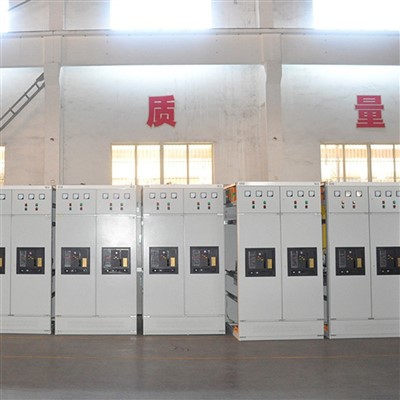
The core function of intelligent power distribution equipment is to realize the intelligent operation and management of the power system. It possesses capabilities such as real-time monitoring, automatic control, fault self-healing, and remote operation and maintenance, significantly improving power supply reliability, energy efficiency, and operation and maintenance efficiency.
Based on the integrated technology and system architecture, its main functions can be summarized into the following three categories:
Intelligent Monitoring and Data Acquisition: Through built-in multi-functional power meters, temperature sensors (such as fiber optic temperature measurement), current and voltage transformers, it collects key parameters such as voltage, current, power factor, harmonics, and equipment temperature in real time. It supports online temperature monitoring of key parts within the distribution cabinet (such as busbar joints and circuit breaker contacts) to prevent faults caused by overheating. Simultaneously, the system can record power quality data, generate energy consumption curves and analysis reports, providing a basis for energy-saving optimization.
Automatic Control and Protection: It supports "four remote" functions-telemetry, remote signaling, remote control, and remote adjustment-to realize remote parameter measurement, status monitoring, operation control, and parameter adjustment. When the system experiences faults such as short circuits, overloads, or leakage, intelligent protection devices can quickly locate and isolate the faulty area. Some systems possess self-healing capabilities, restoring power to non-faulty areas without manual intervention, significantly reducing power outage time.
Intelligent Operation and Maintenance & Integrated Management: The equipment features intelligent early warning functions, such as over-temperature warnings, over-current warnings, and end-of-life reminders, and supports regular maintenance reminders. Connecting to the master station system via industrial Ethernet or fieldbus enables centralized monitoring and video linkage of all equipment. Maintenance personnel can view component brands, models, and electrical parameters at the master station, improving management convenience. Some high-end systems also integrate AI algorithms to predict load change trends, optimize operating modes, and reduce no-load losses.
Furthermore, intelligent power distribution systems are widely used in industrial parks, data centers, commercial buildings, and other locations with high power supply stability requirements. They are also suitable for new energy grid connection scenarios, supporting "plug-and-play" distributed power sources and dynamic reactive power compensation, improving grid adaptability.