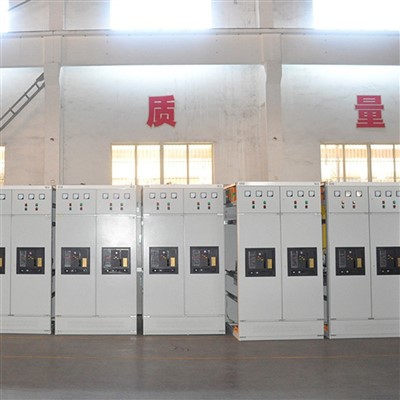
Evaluating the strength of a manufacturer of intelligent power distribution equipment requires a systematic examination of three core dimensions: qualifications and certifications, service response capabilities, and customized delivery cycles. This ensures equipment reliability and project schedule control.
Qualification and Certification: The "Hard Currency" for Judging Compliance and Technical Thresholds
Mandatory Certification: Low-voltage complete sets of equipment (AC≤1000V) must pass CCC certification. The product nameplate must display the CCC mark and number. This is a basic prerequisite for market access.
International and System Certifications: Manufacturers with CE and ISO 9001 quality management system certifications demonstrate standardized production processes and high product consistency. Some high-end projects also require ISO 14001 (Environmental Management) or OHSAS 18001 (Occupational Health and Safety).
Industry-Specific Qualifications: Such as licenses for installation (repair, testing) of power facilities and general contracting qualifications for power engineering construction, these are necessary conditions for participating in large-scale engineering projects.
Technical Capability Evidence: Manufacturers possessing utility model or invention patents (such as "a quickly repairable distribution cabinet structure") typically have stronger technological iteration and problem-solving capabilities.
Service Response Capability: A Key Support for Long-Term Operation and Maintenance
Response Time Commitment: Excellent manufacturers provide 24/7 technical support, responding within 2 hours for general faults and arriving on-site within 4 hours for major faults, avoiding production losses due to delays.
Service Network Coverage: Companies with multiple regional warehousing centers or service outlets nationwide (such as Xianghe Hengtong covering major industrial areas in China) can achieve 48-hour on-site response and rapid spare parts allocation.
Technical Support System: Whether a professional operation and maintenance team is provided, offering value-added services such as remote diagnostics, regular inspections, and operation training, directly impacts the later user experience.